A history made by communities
There is no single documented birthday for sega, and no individual can be credited with inventing an entire communal tradition. Its history belongs within the movement and enslavement of people across the Indian Ocean, colonial plantation societies, and the making of Creole languages and cultures. An account that begins and ends with resort entertainment misses that history.
The heritage literature describes a musical tradition formed through encounters among people with different ancestral origins. That is a stronger starting point than a neat claim that every rhythm came unchanged from one African country. The history of an instrument, a word and a dance gesture need not follow exactly the same route.
Song as an account of everyday life
To listen historically, pay attention to who is speaking and to whom. A song may tell a story, make a joke, remember someone, question authority or describe work and relationships. Enjoyment and social commentary can coexist in the same performance.
Oral transmission does not mean there is no knowledge or discipline. Remembering a repertoire, answering a singer, sustaining an ensemble and knowing when to enter a dance are learned skills. Family and community settings matter alongside stages, recordings and teaching programmes.
From gatherings to recorded music
Recordings and amplified stages let songs travel beyond the setting in which a listener first encountered them. They also change the balance between a lead voice, responding singers and instruments. Compare a percussion-led recording with a later band arrangement rather than expecting all sega to sound alike.
Modern instrumentation does not make a Mauritian musician less Mauritian. It does make it useful to name the style accurately. Sega tipik, electric sega and seggae are connected stories, with different musical practices and artistic intentions.
Read history without turning it into a legend
Ask what kind of evidence a historical claim uses. A dated recording, a community testimony, a colonial text and a contemporary tourism page answer different questions. Colonial descriptions require particular care because the observer’s language and prejudices shape what was written.
This guide treats heritage inscriptions as records of recognition and safeguarding. They are not the beginning of the music, proof that one performance is superior, or permission to speak on behalf of every practitioner. Read the linked community nomination and research alongside the short public summaries.
1835 and the geography of sega
The National Heritage Fund’s nomination connects sega’s development after emancipation in 1835 with the coastal fishing villages and other places where formerly enslaved people settled. Courtyards and beaches became important settings for music carried by families and neighbours. The document records a particularly strong presence in southern Mauritius, followed by wider circulation through rural and urban areas from the 1960s.
The same account describes participation expanding beyond the descendants of enslaved people, including among communities formed through indentured migration. This was a process of contact and change. The wider national embrace of sega did not remove the importance of its Creole bearers or make their experience interchangeable with every other migration history.
The stage and the making of a national dance
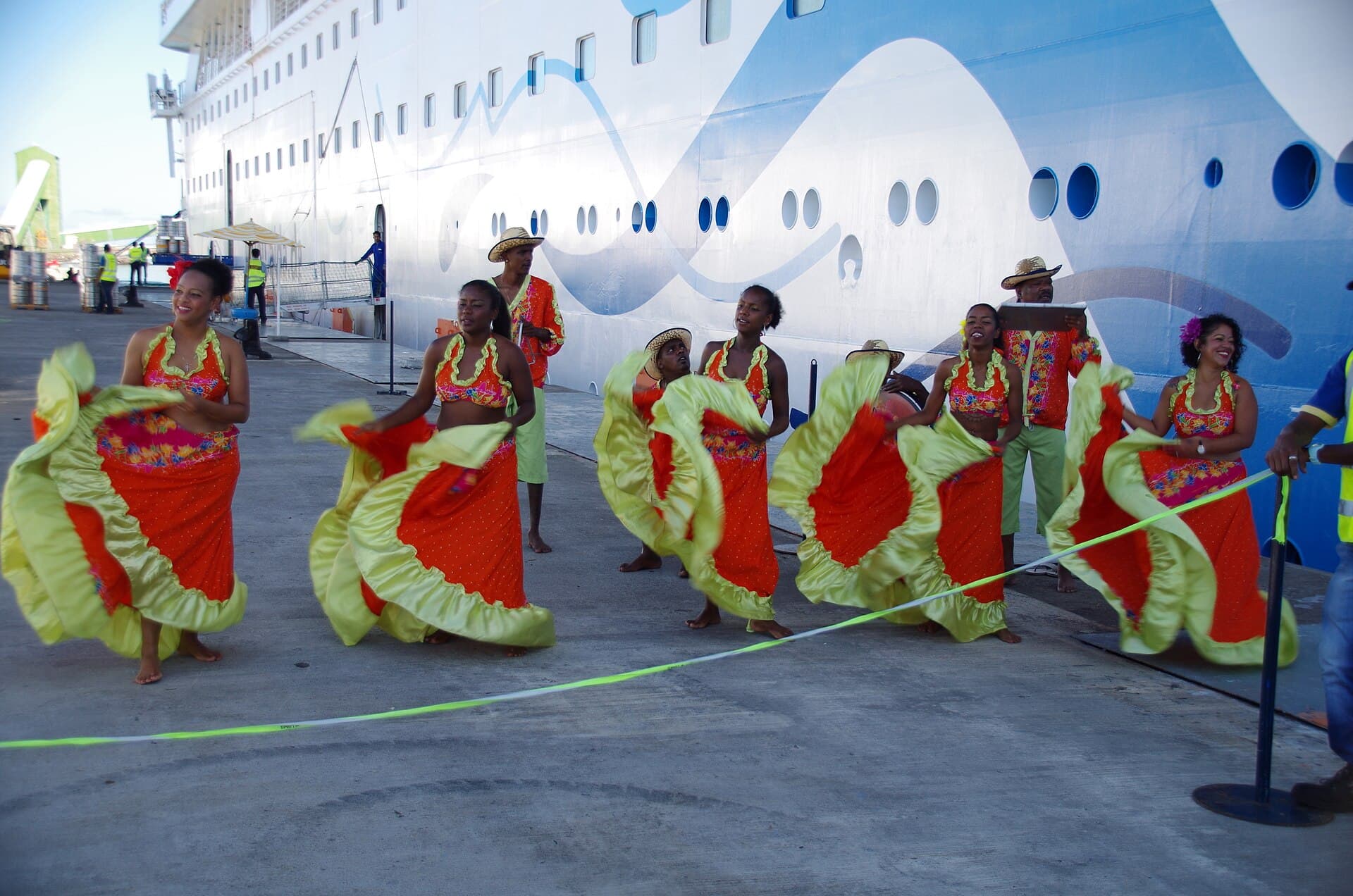
Ethnographer Églantine Gauthier documents hotel troupes in the 1960s and later international tours. Her research distinguishes performers who learned in family and village settings from those who developed careers through urban and hotel circuits. Those settings influenced how sega was presented and who could make a living from it.
For the tenth anniversary of independence in 1978, a national troupe brought together performers including Fanfan, the Cassambo-Nankoo troupe, the Clencys and Serge Lebrasse for a French tour. National representation was being made through particular people, selections and arrangements, rather than simply displaying an unchanged communal form.
A record keeps a particular encounter
The Ocora recordings associated with Ti Frère and Fanfan preserve different singing personalities within sega’s recorded history. Fanfan’s own ravanne making connects the object, the player and the song. An album can carry that relationship to listeners far away, while its recording and edition dates remain part of the historical evidence.
Common questions
Who invented sega?
Sega developed collectively. The available heritage evidence does not support naming one inventor.
Is sega only for tourists?
No. Sega is part of Mauritian cultural life. Visitor performances are one setting among many.
Sources and further reading
Sega Tipik nomination and community participationNational Heritage Fund of Mauritius
Safeguarding sega: transmission, inscription, and appropriation of Chagossian intangible cultural heritageLaura Jeffery and Rebecca Rotter, International Journal of Heritage Studies
Traditional Mauritian SegaUNESCO Intangible Cultural Heritage
Traditional Mauritian Sega nominationNational Heritage Fund, Mauritius
Du séga créole à la danse nationale. Recompositions locales et circulations transnationales mauriciennesÉglantine Gauthier, Revue européenne des migrations internationales
Île Maurice, Hommage à Ti Frère. Séga, musique de l’exilOcora Radio France
Île Maurice. Fanfan. Séga RavanneOcora Radio France
Practical guidance is editorial synthesis. Named sources support cultural claims; venue programmes and inventory require direct confirmation.