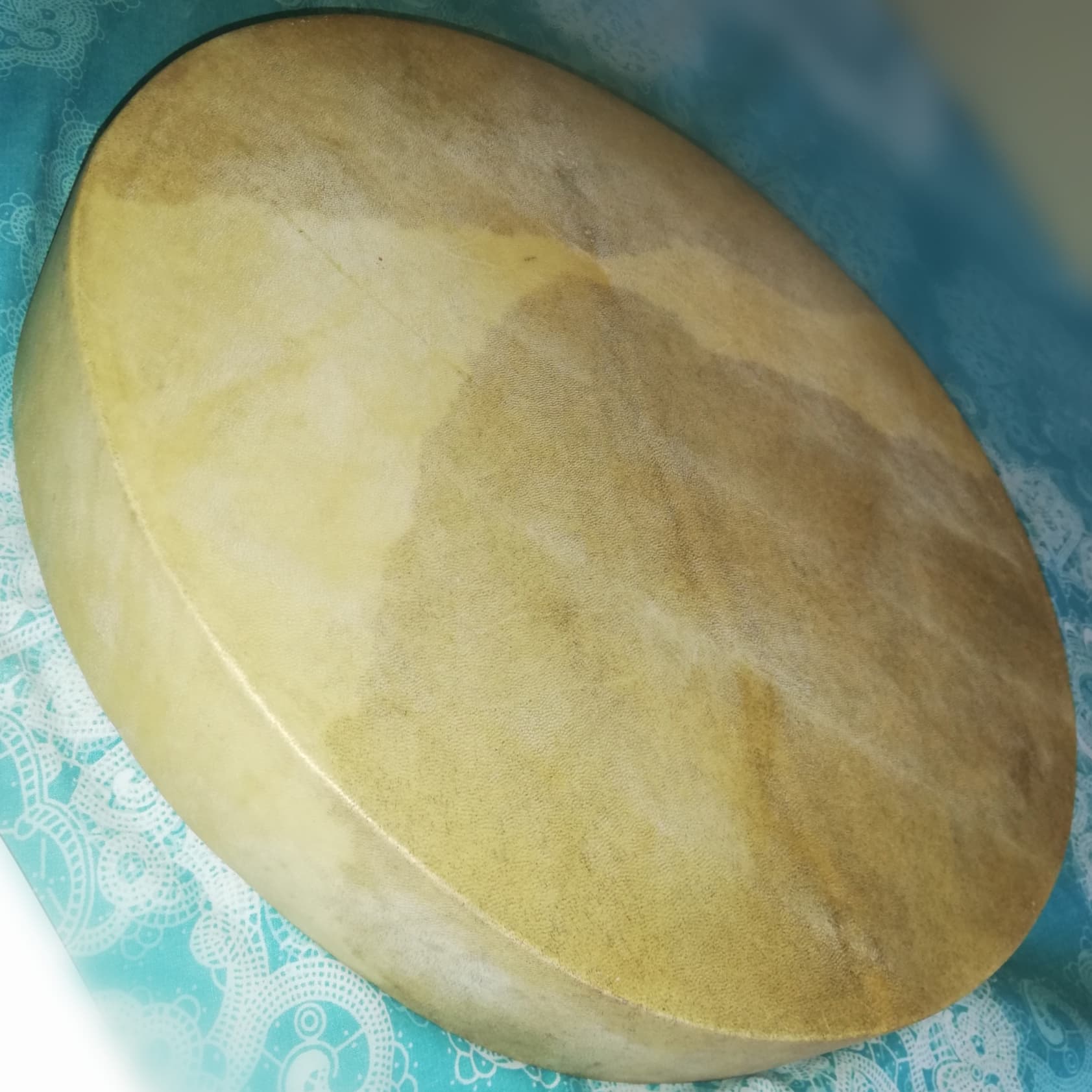
Hear more than one drum sound
Watch a player’s hands and compare strokes. The instrument is not limited to one uniform thump. Listen for differences in resonance and attack, and notice how those differences fit with the other musicians.
For a first lesson, focus on holding the instrument comfortably and producing a controlled sound. A local teacher can demonstrate posture and technique more effectively than a static drawing.
Ask about the actual instrument
Check the frame, the attachment of the head and the finish at the rim. Ask what the membrane is made from, how the instrument should be stored and whether the maker can repair or replace the head. These are purchasing questions, not a claim that every workshop builds the same way.
Ask for a demonstration of the instrument you intend to buy. A recording of another drum does not establish the tone, condition or suitability of yours.
Humidity, heat and care
Traditional performance documentation describes warming skin drums to tune them. That observation is not a safe home-care instruction for every instrument. Ask the maker for the method appropriate to your drum, especially if it uses a synthetic head or unfamiliar adhesive.
Do not improvise with a flame or direct heater. Transport the instrument in a protective case and ask about humidity and storage. If you are flying, check the airline’s size rules and the destination’s material-entry requirements before purchase.
Find a teacher as well as an instrument
When contacting a teacher, explain whether you want an introduction, regular lessons or help accompanying a group. Ask whether the teacher provides an instrument and how practice between lessons works.
Support the person making or teaching the instrument. Agree the price, delivery date and any recording permissions directly; the guide does not maintain live inventory or collect deposits.
Common questions
Why are ravannes sometimes warmed?
Skin tension changes with conditions. Warming appears in traditional practice, but care should follow the advice for the specific instrument.
Sources and further reading
Sega Tipik nomination and community participationNational Heritage Fund of Mauritius
Sega instrumentsUniversity of Edinburgh, CHAGOS archive
Practical guidance is editorial synthesis. Named sources support cultural claims; venue programmes and inventory require direct confirmation.