Begin with a performance in its real place
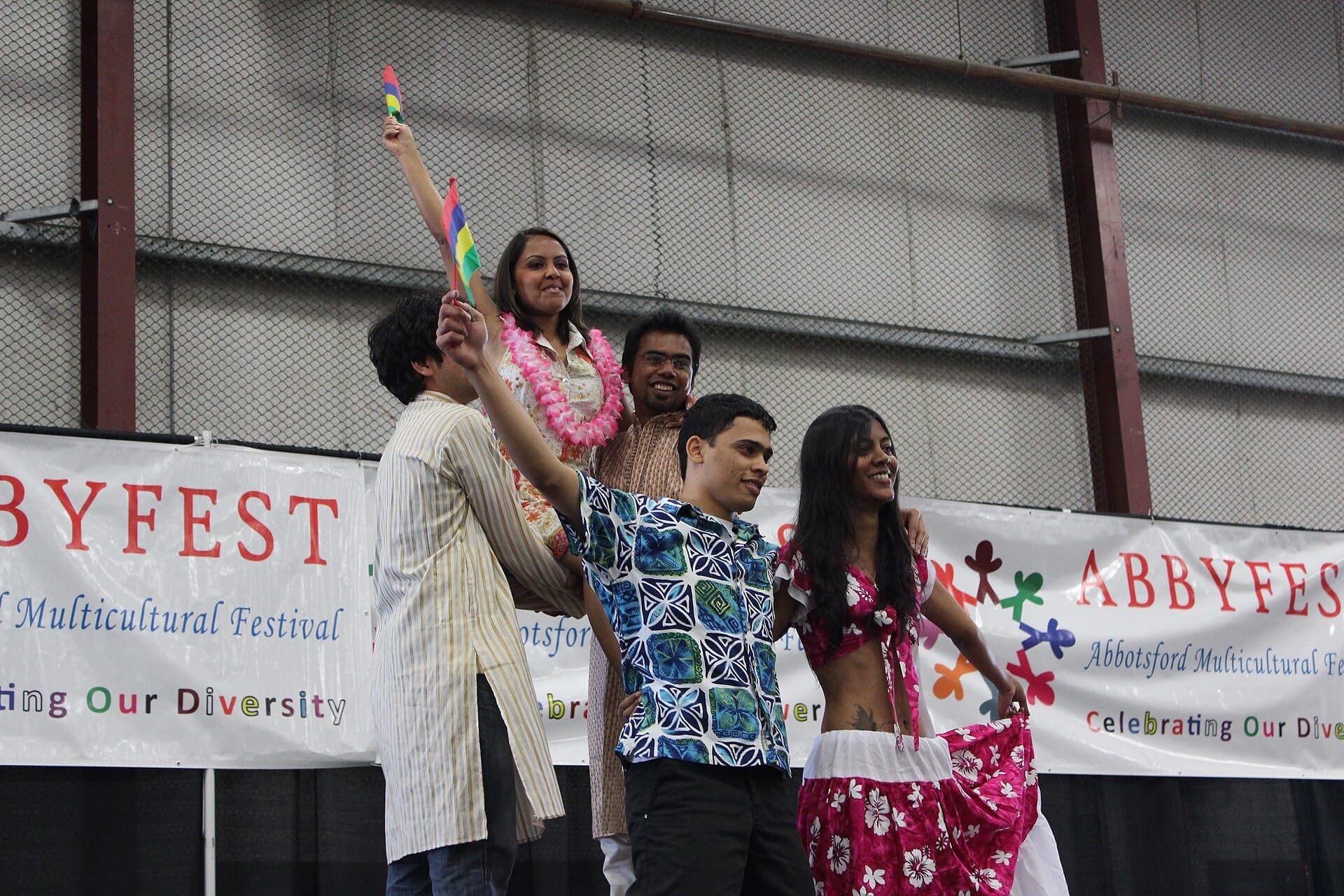
The guide’s gallery includes a photograph of Mauritian dancers at AbbyFest in Abbotsford, Canada, in 2012. It is credited to the University of the Fraser Valley and shows performers holding flags during a finale. The place, date and photographer are part of what makes the image useful. They locate a public diaspora performance rather than presenting it as an unspecified event in Mauritius.
A photograph can establish what is visible in that documented moment, but it cannot tell a reader everything about the music, performers or audience. Keep its caption attached when using it to discuss sega abroad. The image opens a question about cultural presentation in a new setting; it does not establish a complete history of the people pictured or announce a current event that visitors can book.

Understand circulation as part of sega’s history
Églantine Gauthier’s research examines sega’s development as a national dance through local change and international circulation. Its interviews and historical examples distinguish family practice, hotel troupes and cultural representation abroad. This gives a useful framework for understanding why a tradition may appear in several settings, with different relationships between performers and audiences.
In that scholarly account, change is part of the history being studied. A staged presentation abroad should not automatically be dismissed as detached from cultural life, just as it should not be assumed to represent every community practice. The relevant questions concern who performs, how the occasion is organised and what the participants are trying to communicate. Those details are more informative than judging a performance only by its distance from Mauritius.
Look at what a public occasion asks performers to do
A cultural festival and a family gathering have different purposes. A public event may introduce music to people who do not know the language or instruments, while a family occasion may involve shared repertoire and relationships that require less explanation among participants. Gauthier’s distinction among settings helps make this difference visible without setting up a simple hierarchy between them.
When encountering sega at an event abroad, read the programme and retain the group’s actual name. Notice whether the organisers identify a tradition, explain an island connection or describe a broader cultural presentation. These are practical ways to understand the event you are attending. The programme’s own account is a starting point for questions, rather than permission to assign the performers a background or identity from their appearance.
Keep forced displacement distinct from voluntary migration
Chagossian sega tambour originates in the Chagos Archipelago. UNESCO’s description links its songs and performance to everyday experience, remembrance and the consequences of displacement. Laura Jeffery and Rebecca Rotter’s research examines safeguarding, transmission and community claims within that history. This is a specific account of people carrying heritage after removal from their islands, not simply another example of choosing to settle abroad.
The distinction matters when using the broad word diaspora. Different communities can share experiences of distance while reaching that situation through very different histories. A Chagossian performance in Mauritius or another country should retain its name, language and origin. A general national story can otherwise obscure the community account that the music and its practitioners help sustain.
Follow named people through the archive
The University of Edinburgh’s CHAGOS Cultural Heritage Across Generations archive provides material on song, music, dance and instruments. Its instrument demonstrations include France and Joseph Bertrand and address making, tuning and teaching, with a comparison to Mauritian techniques. Named practitioners make the knowledge traceable to people and demonstrations rather than to an anonymous description of traditional percussion.
Use those institutional pages to explore the material in context. Read the surrounding description as well as watching or listening to an individual item. An archive can preserve access across distance and time, but its publication does not establish that an event, lesson or contact arrangement is currently available. The value for a new listener lies first in the documented connection between the people, the practice and the explanation.
Consider how knowledge continues between generations
UNESCO identifies participation and apprenticeship as ways of transmitting sega tipik. Its Chagossian record also highlights safeguarding concerns, including the loss of elders and interruptions to community transmission. Reading these accounts together shows why continuation involves more than keeping a recording accessible. Repertoire, instrument knowledge, language and the social setting of performance can all matter to what is passed on.
A public performance abroad may make part of that practice visible to a wider audience, while learning continues in other settings. Avoid assuming that the photographed stage event is the whole of a community’s cultural life. If practitioners describe how they learn, teach or remember repertoire, keep their account attached to the relevant people and occasion. Their explanations can reveal connections that an outside spectator would otherwise miss.
Listen across distance with accurate credits
For your own exploration, keep the artist or group, named tradition, actual place and date with each recording or photograph. A performance in Canada can be described accurately as a Mauritian diaspora event without being relocated to Mauritius. A Chagossian archive item can remain connected to its community history while being viewed anywhere in the world. Accurate context makes these encounters more meaningful, not less accessible.
The gallery, artist profiles and separate island-tradition guides provide several routes onward. Use a photograph to investigate its documented occasion, a recording to follow credited performers, and a heritage source to understand the tradition being described. Sega beyond Mauritius is a subject of relationships and particular histories. Those details allow listeners to explore shared musical connections while keeping the people carrying them in view.
Common questions
Does the gallery photograph show a performance in Mauritius?
The AbbyFest finale photograph shows Mauritian dancers in Abbotsford, Canada, in 2012. Its caption and credit preserve that context. It should not be presented as a photograph of a show in Mauritius or as evidence of a current event programme.
Is every sega performance abroad the same kind of diaspora event?
No. Public cultural representation, family practice and other settings have different purposes. Identify the community, performers and occasion from the programme or source, and avoid assigning a personal migration history to people from a photograph alone.
Why distinguish Chagossian history in this discussion?
Chagossian sega tambour is connected to the Chagos Archipelago and a history of forced displacement. Its community memory and safeguarding concerns should not be absorbed into a generic account of voluntary migration or main-island Mauritian performance.
Where can I explore Chagossian songs and instruments?
The University of Edinburgh’s CHAGOS Cultural Heritage Across Generations archive provides song and instrument material, including named practitioner demonstrations. Use the original institutional pages to retain the context and credits of the recordings.
Sources and further reading
Mauritius dancers end with rousing finale, AbbyFest 2012 University of the Fraser Valley, photographic record
Du séga créole à la danse nationale. Recompositions locales et circulations transnationales mauriciennes Églantine Gauthier, Revue européenne des migrations internationales
Sega tambour Chagos UNESCO
Safeguarding sega: transmission, inscription, and appropriation of Chagossian intangible cultural heritage Laura Jeffery and Rebecca Rotter, International Journal of Heritage Studies
Song, CHAGOS Cultural Heritage Across Generations University of Edinburgh
Sega instruments, CHAGOS Cultural Heritage Across Generations University of Edinburgh