Start with Rodrigues
A guide to sega needs room for island-specific traditions. The useful question is not whether Rodrigues sounds exactly like Mauritius, but how musicians in Rodrigues describe their own practice. Start with the official nomination and a named performance.
When choosing recordings, retain the artist, island and recording context. A playlist labelled only “tropical music” removes precisely the information that helps a listener understand what they hear.
Compare without flattening the differences
Listen for the drum, the song and the way participants respond. Then compare with a named sega tipik performance. Describe what you hear in those two examples, rather than declaring that all musicians on either island must perform in the same way.
A comparison notebook can be simple. Record the performer, title, source, instruments you can confidently identify and questions you still have. Uncertainty is useful when it leads you back to the musicians or their published explanations.
Finding a performance
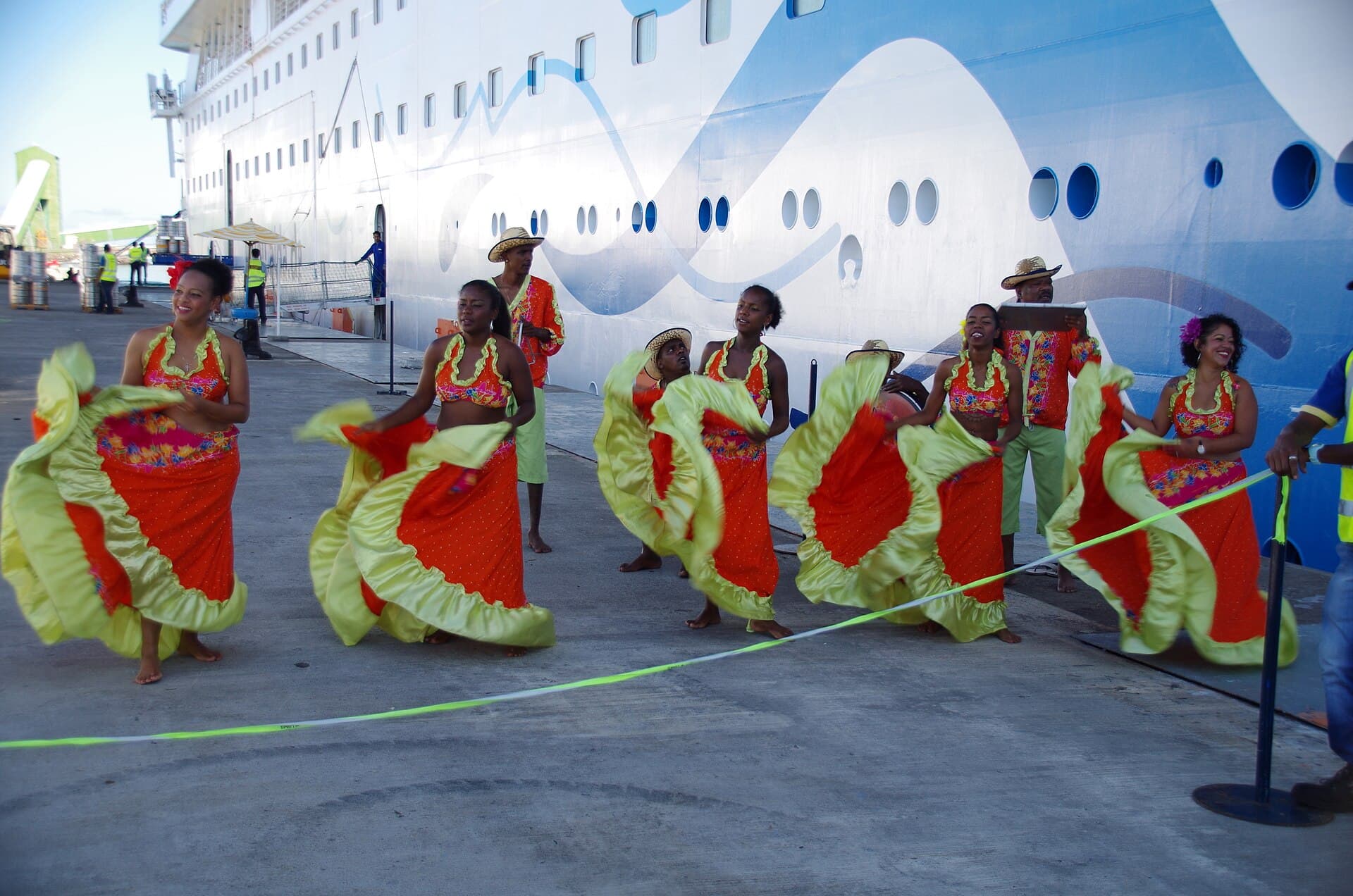
If you are travelling to Rodrigues, ask your accommodation or an event organiser for a named group, date, venue and admission conditions. A general description of island culture is not confirmation that a public performance happens every evening.
For workshops, establish whether the session is suitable for beginners, which language is used and whether instruments are provided. Pay teachers and performers for their time, and ask before photographing.
The mareshal and the ensemble
The nomination describes a mareshal who leads the singing and can compose a song as the performance unfolds. The call “sizone” cues the tambour player; other voices form the chorus and participants add handclaps. Song is an active exchange with the people present, not simply a fixed text delivered over accompaniment.
Alongside the drum and triyang, the ensemble includes bwat and mayos. Bwat are paired tins sounded against one another; mayos are wooden clappers. These are distinct sound-making roles, rather than alternative names for the Mauritian maravanne. The nomination also describes playful changes of dancing partner, with participants responding to one another through movement.
Rodriguan Creole and community life
UNESCO’s decision identifies Rodriguan Creole as the language of this practice. It describes songs as a means of sharing news, connecting neighbours and working through disagreements. The social importance of sega tambour therefore extends beyond a concert’s duration or the appearance of a dance costume.
Families form a centre of oral transmission. Groups, schools and community centres also provide places to learn and rehearse. The 2017 decision notes both the livelihoods supported by performance and instrument making and the need to monitor excessive commercialization. Recognition brings opportunities, but it can also change what audiences expect from a living practice.
A mother’s knowledge carried forward
In the nomination’s community testimony, musician and dancer Luisnige Emilien explains that her mother passed on her interest in sega tambour. She describes playing the mayos, also called pak-pak, and taking up the practice as her mother stopped performing. Such accounts show transmission as a relationship between named people. They also make women visible as musicians, dancers and people sustaining a group’s knowledge.
Sources and further reading
Sega tambour of Rodrigues IslandUNESCO Intangible Cultural Heritage
Sega tambour of Rodrigues nominationNational Heritage Fund, Mauritius
Mridangam Grade 8, Music in Mauritius and around the GlobeMahatma Gandhi Institute
Decision 12.COM 11.B.22UNESCO
Rodrigues community consent and practitioner accountsUNESCO nomination archive
Practical guidance is editorial synthesis. Named sources support cultural claims; venue programmes and inventory require direct confirmation.